El Salvador: Finca Nejapa - Roma
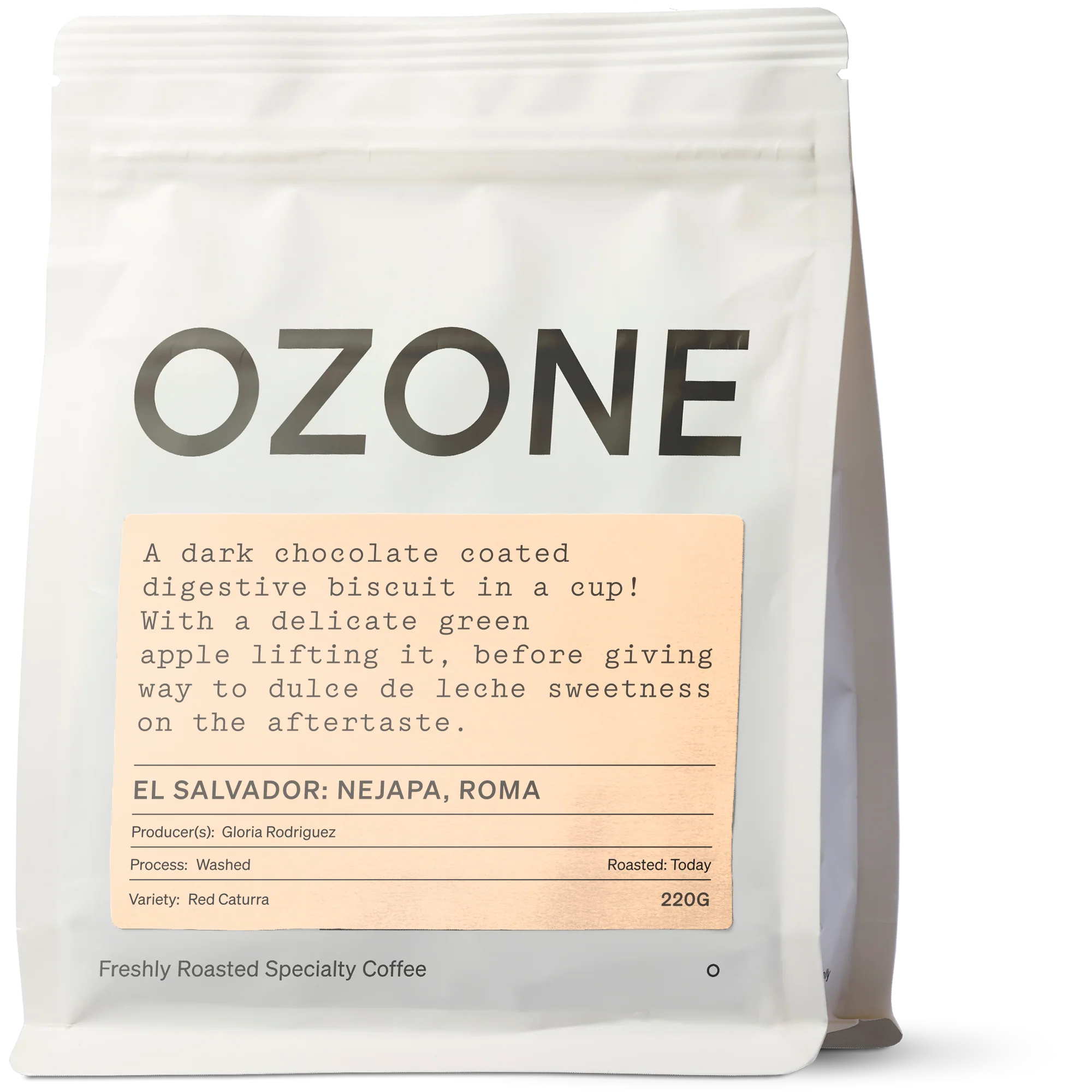
El Salvador: Finca Nejapa - Roma Tablón, Red Caturra, Washed
A dark chocolate coated digestive biscuit in a cup! With a delicate green apple lifting it, before giving way to dulce de leche sweetness on the aftertaste.
Gloria Mercedes Rodríguez Fontan is a well-known coffee producer for a reason. Hers is a name you will probably recognise if you’ve been buying from us for any length of time, as she’s been bringing us coffees from Finca San José and (this one) Finca Nejapa since 2009. She's a fourth-generation coffee grower and owns and personally supervises six small farms located in the Apaneca-Ilamatepec mountain range of El Salvador: Nejapa, San José, Mamatita, El Porvenir, Nueva Granada and La Lagunita.
This estate sits on the slopes of the Laguna de Las Ninfas (which translates to “water lilies lagoon”). It has a spectacular view over the Apaneca-Ilamatepec mountain range, including the impressive Itzalco volcano, and even out to the Pacific Ocean and the port of Acajutla. This region is in the Mesoamerican Biological Corridor System that stretches down through Central America, all the way from Mexico to Panama. In El Salvador, where more than 80% of the country’s coffee is produced under shade, this eco-system is concentrated heavily in coffee forest and in the western highlands shade grown coffee plantations link nine protected core zones. For this reason, coffee farms such as Nejapa play a vital role as a sanctuary for hundreds of migratory and native bird species.
Finca Nejapa was inherited by Gloria’s father, José María Rodríguez Herrera, in the 1950s. At that time the property was devoted to dairy cattle, and it was José Maria who started growing coffee by planting Bourbon trees on the land. Little by little, he noticed coffee was extremely productive in this area. 70 years on, the farm has expanded its varietal range to include Red and Yellow Caturra, Red and Yellow Pacamara, Red, Orange and Yellow Bourbon, Geisha, and Elephante. The farm is blessed with amazing coffee terroir conditions, at an ideal altitude with sandy loam soils rich in organic matter.
This coffee comes specifically from the Roma tablón of Nejapa. The farm has 18.2 hectares of land in total, of which 6.3 hectares are dedicated to growing coffee. In El Salvador, coffee farms are often divided into smaller sections called tablóns - distinct plots within a farm, each with their own microclimate, soil character, and sometimes varietal makeup. The coffee-growing area at Finca Nejapa is divided into three separate tablóns: Los Vientos (2.1 hectares), Santa Marta (1.4 hectares), Hamburgo (3.5 hectares), and Roma (2.8 hectares). The farm has also 7 hectares of land that has been reforested with cedar trees and a diverse range of shade trees, which helps maintain and preserve both the soil conditions and a wide array of local animal life.
The Roma tablón sits on the western side of the farm and was left unplanted until Gloria took out a loan through a local investment bank to redevelop the land. The variety chosen was Red Caturra - a short-size tree with reliable yields, a practical choice when you have a loan to repay. Gloria named the plot by combining the first two letters of her children's names - Roberto and María José. Roma became the first Red Caturra ever to place in El Salvador's Cup of Excellence - a competition Gloria has entered every year since 2007 without ever leaving empty-handed.
Gloria works under strict specialty coffee standards and employs around 35 people during the harvesting season. Year-round she manages a permanent "winter works" team of 15 people. The idea is to have a solid trained and skilled working group that receive better wages and working conditions for their dedication. During harvest months Gloria pays around 90% above the legal minimum wage to give workers incentive to assure the best quality picking possible. Coffee pickers are selected from her staff based on their experience and passion, and their understanding of the requirements to obtain high-quality coffee. Coffee on her farms is harvested entirely by hand only when fully ripe, requiring a high level of experience and care. After each production cycle, she provides a proportional bonus – typically equating to 1.2 months’ worth of extra income for her year-round team. She supervises the whole process directly with the support of Antonio Avelino, her farm foreman.
Traceability
- Country: El Salvador
- Department: Ahuachapán
- Municipality: Apaneca
- Nearest city: Ataco
- Producer: Gloria Rodriguez
- Farm: Finca Nejapa
- Tablón: Roma
- Elevation: 1,470-1,570 m.a.s.l
- Variety: Red Caturra
- Processing method: Washed
- Farm size: 18.2 hectares
- Coffee growing area: 6.3 hectares
- Tablon size: 2.8 hectare
Roast Information
Medium to Medium Dark. A nice, balanced roast profile works best, with slower roasts emphasising sweetness and body.
Cupping Scores
Cupping Notes: Dark chocolate, green apple, dulce de leche.
Cup of Excellence Cupping Scores
- Clean Cup: 6/8
- Sweetness: 6.5/8
- Acidity: 6/8
- Mouthfeel: 6/8
- Flavour: 6/8
- Aftertaste: 6.5/8
- Balance: 6.5/8
- Overall: 6.5/8
- Correction: +36
- Total: 86/100
If you'd like to find out more about how we score coffees, make sure to read our blog post “What Do Coffee Cupping Scores Actually Mean?”
El Salvador: Finca Nejapa - Roma Tablón, Red Caturra, Washed
A dark chocolate coated digestive biscuit in a cup! With a delicate green apple lifting it, before giving way to dulce de leche sweetness on the aftertaste.
Gloria Mercedes Rodríguez Fontan is a well-known coffee producer for a reason. Hers is a name you will probably recognise if you’ve been buying from us for any length of time, as she’s been bringing us coffees from Finca San José and (this one) Finca Nejapa since 2009. She's a fourth-generation coffee grower and owns and personally supervises six small farms located in the Apaneca-Ilamatepec mountain range of El Salvador: Nejapa, San José, Mamatita, El Porvenir, Nueva Granada and La Lagunita.
This estate sits on the slopes of the Laguna de Las Ninfas (which translates to “water lilies lagoon”). It has a spectacular view over the Apaneca-Ilamatepec mountain range, including the impressive Itzalco volcano, and even out to the Pacific Ocean and the port of Acajutla. This region is in the Mesoamerican Biological Corridor System that stretches down through Central America, all the way from Mexico to Panama. In El Salvador, where more than 80% of the country’s coffee is produced under shade, this eco-system is concentrated heavily in coffee forest and in the western highlands shade grown coffee plantations link nine protected core zones. For this reason, coffee farms such as Nejapa play a vital role as a sanctuary for hundreds of migratory and native bird species.
Finca Nejapa was inherited by Gloria’s father, José María Rodríguez Herrera, in the 1950s. At that time the property was devoted to dairy cattle, and it was José Maria who started growing coffee by planting Bourbon trees on the land. Little by little, he noticed coffee was extremely productive in this area. 70 years on, the farm has expanded its varietal range to include Red and Yellow Caturra, Red and Yellow Pacamara, Red, Orange and Yellow Bourbon, Geisha, and Elephante. The farm is blessed with amazing coffee terroir conditions, at an ideal altitude with sandy loam soils rich in organic matter.
This coffee comes specifically from the Roma tablón of Nejapa. The farm has 18.2 hectares of land in total, of which 6.3 hectares are dedicated to growing coffee. In El Salvador, coffee farms are often divided into smaller sections called tablóns - distinct plots within a farm, each with their own microclimate, soil character, and sometimes varietal makeup. The coffee-growing area at Finca Nejapa is divided into three separate tablóns: Los Vientos (2.1 hectares), Santa Marta (1.4 hectares), Hamburgo (3.5 hectares), and Roma (2.8 hectares). The farm has also 7 hectares of land that has been reforested with cedar trees and a diverse range of shade trees, which helps maintain and preserve both the soil conditions and a wide array of local animal life.
The Roma tablón sits on the western side of the farm and was left unplanted until Gloria took out a loan through a local investment bank to redevelop the land. The variety chosen was Red Caturra - a short-size tree with reliable yields, a practical choice when you have a loan to repay. Gloria named the plot by combining the first two letters of her children's names - Roberto and María José. Roma became the first Red Caturra ever to place in El Salvador's Cup of Excellence - a competition Gloria has entered every year since 2007 without ever leaving empty-handed.
Gloria works under strict specialty coffee standards and employs around 35 people during the harvesting season. Year-round she manages a permanent "winter works" team of 15 people. The idea is to have a solid trained and skilled working group that receive better wages and working conditions for their dedication. During harvest months Gloria pays around 90% above the legal minimum wage to give workers incentive to assure the best quality picking possible. Coffee pickers are selected from her staff based on their experience and passion, and their understanding of the requirements to obtain high-quality coffee. Coffee on her farms is harvested entirely by hand only when fully ripe, requiring a high level of experience and care. After each production cycle, she provides a proportional bonus – typically equating to 1.2 months’ worth of extra income for her year-round team. She supervises the whole process directly with the support of Antonio Avelino, her farm foreman.
Traceability
- Country: El Salvador
- Department: Ahuachapán
- Municipality: Apaneca
- Nearest city: Ataco
- Producer: Gloria Rodriguez
- Farm: Finca Nejapa
- Tablón: Roma
- Elevation: 1,470-1,570 m.a.s.l
- Variety: Red Caturra
- Processing method: Washed
- Farm size: 18.2 hectares
- Coffee growing area: 6.3 hectares
- Tablon size: 2.8 hectare
Roast Information
Medium to Medium Dark. A nice, balanced roast profile works best, with slower roasts emphasising sweetness and body.
Cupping Scores
Cupping Notes: Dark chocolate, green apple, dulce de leche.
Cup of Excellence Cupping Scores
- Clean Cup: 6/8
- Sweetness: 6.5/8
- Acidity: 6/8
- Mouthfeel: 6/8
- Flavour: 6/8
- Aftertaste: 6.5/8
- Balance: 6.5/8
- Overall: 6.5/8
- Correction: +36
- Total: 86/100
If you'd like to find out more about how we score coffees, make sure to read our blog post “What Do Coffee Cupping Scores Actually Mean?”
Original: $10.89
-65%$10.89
$3.81Description
El Salvador: Finca Nejapa - Roma Tablón, Red Caturra, Washed
A dark chocolate coated digestive biscuit in a cup! With a delicate green apple lifting it, before giving way to dulce de leche sweetness on the aftertaste.
Gloria Mercedes Rodríguez Fontan is a well-known coffee producer for a reason. Hers is a name you will probably recognise if you’ve been buying from us for any length of time, as she’s been bringing us coffees from Finca San José and (this one) Finca Nejapa since 2009. She's a fourth-generation coffee grower and owns and personally supervises six small farms located in the Apaneca-Ilamatepec mountain range of El Salvador: Nejapa, San José, Mamatita, El Porvenir, Nueva Granada and La Lagunita.
This estate sits on the slopes of the Laguna de Las Ninfas (which translates to “water lilies lagoon”). It has a spectacular view over the Apaneca-Ilamatepec mountain range, including the impressive Itzalco volcano, and even out to the Pacific Ocean and the port of Acajutla. This region is in the Mesoamerican Biological Corridor System that stretches down through Central America, all the way from Mexico to Panama. In El Salvador, where more than 80% of the country’s coffee is produced under shade, this eco-system is concentrated heavily in coffee forest and in the western highlands shade grown coffee plantations link nine protected core zones. For this reason, coffee farms such as Nejapa play a vital role as a sanctuary for hundreds of migratory and native bird species.
Finca Nejapa was inherited by Gloria’s father, José María Rodríguez Herrera, in the 1950s. At that time the property was devoted to dairy cattle, and it was José Maria who started growing coffee by planting Bourbon trees on the land. Little by little, he noticed coffee was extremely productive in this area. 70 years on, the farm has expanded its varietal range to include Red and Yellow Caturra, Red and Yellow Pacamara, Red, Orange and Yellow Bourbon, Geisha, and Elephante. The farm is blessed with amazing coffee terroir conditions, at an ideal altitude with sandy loam soils rich in organic matter.
This coffee comes specifically from the Roma tablón of Nejapa. The farm has 18.2 hectares of land in total, of which 6.3 hectares are dedicated to growing coffee. In El Salvador, coffee farms are often divided into smaller sections called tablóns - distinct plots within a farm, each with their own microclimate, soil character, and sometimes varietal makeup. The coffee-growing area at Finca Nejapa is divided into three separate tablóns: Los Vientos (2.1 hectares), Santa Marta (1.4 hectares), Hamburgo (3.5 hectares), and Roma (2.8 hectares). The farm has also 7 hectares of land that has been reforested with cedar trees and a diverse range of shade trees, which helps maintain and preserve both the soil conditions and a wide array of local animal life.
The Roma tablón sits on the western side of the farm and was left unplanted until Gloria took out a loan through a local investment bank to redevelop the land. The variety chosen was Red Caturra - a short-size tree with reliable yields, a practical choice when you have a loan to repay. Gloria named the plot by combining the first two letters of her children's names - Roberto and María José. Roma became the first Red Caturra ever to place in El Salvador's Cup of Excellence - a competition Gloria has entered every year since 2007 without ever leaving empty-handed.
Gloria works under strict specialty coffee standards and employs around 35 people during the harvesting season. Year-round she manages a permanent "winter works" team of 15 people. The idea is to have a solid trained and skilled working group that receive better wages and working conditions for their dedication. During harvest months Gloria pays around 90% above the legal minimum wage to give workers incentive to assure the best quality picking possible. Coffee pickers are selected from her staff based on their experience and passion, and their understanding of the requirements to obtain high-quality coffee. Coffee on her farms is harvested entirely by hand only when fully ripe, requiring a high level of experience and care. After each production cycle, she provides a proportional bonus – typically equating to 1.2 months’ worth of extra income for her year-round team. She supervises the whole process directly with the support of Antonio Avelino, her farm foreman.
Traceability
- Country: El Salvador
- Department: Ahuachapán
- Municipality: Apaneca
- Nearest city: Ataco
- Producer: Gloria Rodriguez
- Farm: Finca Nejapa
- Tablón: Roma
- Elevation: 1,470-1,570 m.a.s.l
- Variety: Red Caturra
- Processing method: Washed
- Farm size: 18.2 hectares
- Coffee growing area: 6.3 hectares
- Tablon size: 2.8 hectare
Roast Information
Medium to Medium Dark. A nice, balanced roast profile works best, with slower roasts emphasising sweetness and body.
Cupping Scores
Cupping Notes: Dark chocolate, green apple, dulce de leche.
Cup of Excellence Cupping Scores
- Clean Cup: 6/8
- Sweetness: 6.5/8
- Acidity: 6/8
- Mouthfeel: 6/8
- Flavour: 6/8
- Aftertaste: 6.5/8
- Balance: 6.5/8
- Overall: 6.5/8
- Correction: +36
- Total: 86/100
If you'd like to find out more about how we score coffees, make sure to read our blog post “What Do Coffee Cupping Scores Actually Mean?”