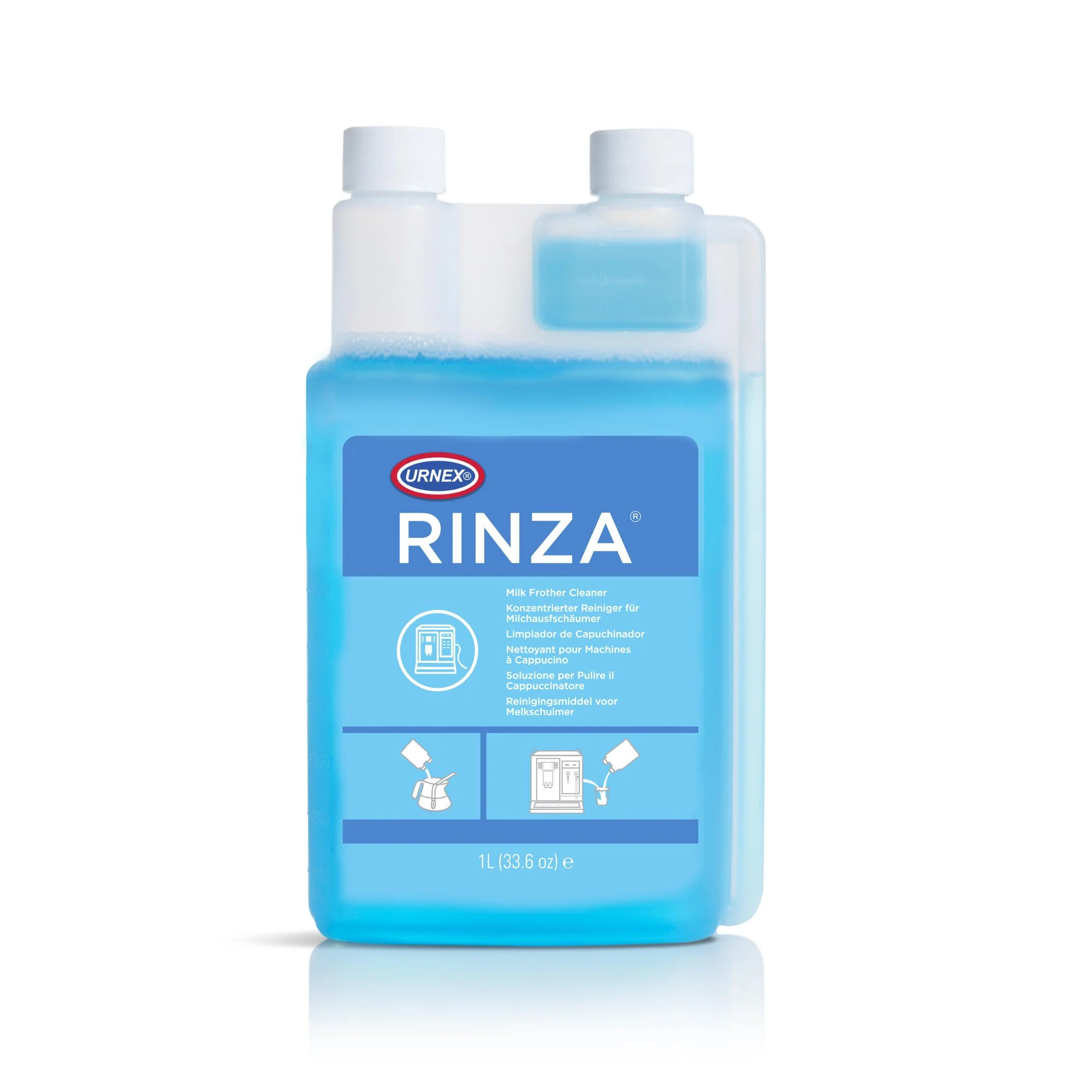
Urnex Rinza Alkaline Milk System Cleaner 1.1L
Urnex Rinza Alkaline Milk System Cleaner 1.1L
If you're serving milk-based drinks, steam wand and milk system hygiene deserves just as much attention as your espresso machine cleaning routine. Milk residue builds up quickly inside steam wands, automatic frother systems and internal milk lines, and left unchecked it creates a breeding ground for bacteria, generates unpleasant odours and has a direct impact on the taste of every flat white and latte you pull. Rinza Alkaline from Urnex is the professional-standard solution for keeping milk systems clean, and it's a product that earns its place in any café or home espresso setup where steamed milk is part of the picture.
The alkaline formula is specifically engineered to cut through the three things that make milk residue so stubborn: proteins, fats and calcium deposits. It works both as a circulating cleaner for automatic frother systems and as a soak for steam wands, pitchers and removable milk system components. The 1.1-litre bottle includes a built-in dosing chamber, which takes the guesswork out of measuring and reduces waste during busy service. At a dilution of 15 to 30ml per 500ml of water for auto-frothers and 30ml per 500ml for soaking, a single bottle delivers over 30 uses, making it genuinely good value for regular maintenance.
Rinza is NSF certified and safe for food-contact surfaces, which matters in any commercial setting where hygiene compliance is non-negotiable. It's compatible with the full range of milk delivery systems you're likely to encounter, from traditional steam wands on commercial espresso machines to the integrated milk frother systems found in bean-to-cup machines and standalone frother units. Paired with Cafiza2 for espresso machine cleaning, Rinza completes the core cleaning routine for any setup where milk is a significant part of the menu.
Technical Specifications
- Brand: Urnex
- Product: Rinza Alkaline Milk System Cleaner
- SKU: URN0101
- Format: Liquid
- Volume: 1.1 litres
- Approx. uses per bottle: 30+
- Dosing for auto-frothers: 15 to 30ml per 500ml of cold water
- Dosing for steam wands and soaking: 30ml per 500ml of warm water
- Soak time: 15 to 30 minutes
- Application methods: Circulation through auto-frother system, component soak, steam wand soak
- Compatible equipment: Automatic milk frothers, traditional steam wands, bean-to-cup milk systems, internal milk lines, stainless steel milk pitchers
- Key action: Breaks down milk proteins, fats and calcium deposits
- Formula type: Alkaline
- Built-in dosing chamber: Yes
- Certification: NSF certified; safe for food-contact surfaces
- Safety: COSHH/Safety Data Sheet available from Urnex.co.uk
- Manufacturer: Urnex Brands LLC
FAQs
What does Rinza Alkaline actually clean?
Rinza Alkaline is formulated to break down the three main components of milk residue: proteins, fats and calcium deposits. These accumulate inside steam wands, automatic frother systems, internal milk lines and stainless steel pitchers, and are the primary cause of off-flavours, blocked lines and unhygienic equipment in any setup that serves milk-based drinks.
How do I use Rinza with an automatic milk frother?
Mix 15 to 30ml of Rinza with 500ml of cold water, insert the suction tube into the solution, and run the entire solution through the frother system. Follow with two full rinse cycles using fresh cold water to ensure all traces of the cleaning solution are flushed through before the system goes back into service.
How do I use Rinza to clean a steam wand?
Mix 30ml of Rinza with 500ml of warm water and soak the steam wand or any removable milk system components in the solution for 15 to 30 minutes. Rinse all parts thoroughly with clean water before returning to service. The same solution can be used to soak stainless steel milk pitchers.
How often should I clean my milk system with Rinza?
For commercial machines in regular use, daily cleaning is the recommended standard. Milk residue builds up quickly, particularly in warm milk line environments, and regular cleaning prevents the kind of build-up that leads to blocked lines, persistent odours and compromised drink quality. For lower-volume home setups, cleaning after every use or at minimum daily is good practice.
Is Rinza Alkaline safe for bean-to-cup machines with integrated milk systems?
Yes, Rinza Alkaline is compatible with the integrated milk systems found in bean-to-cup machines. Always follow your machine manufacturer's instructions for milk system cleaning cycles, as the specific process will vary by machine model. Rinza is safe for use on all internal milk system components and food-contact surfaces.
How many uses does a 1.1-litre bottle provide?
The 1.1-litre bottle provides over 30 uses based on the standard dosing of 30ml per cleaning cycle. The bottle includes a built-in dosing chamber to make measuring quick and accurate, which also helps minimise waste and ensure consistent dosing across a busy team.
Is there a difference between Rinza Alkaline and Rinza Acid?
Yes. Rinza Alkaline (this product) is formulated to break down organic milk residue including proteins and fats, and is suitable for daily use on all milk systems. Rinza Acid is designed to remove mineral scale and calcium deposits that can build up specifically in automatic milk frother systems over time. The two products target different types of residue and are often used as part of a combined maintenance routine.
Is Rinza safe for food-contact surfaces?
Yes, Rinza Alkaline is NSF certified and approved for use on food-contact surfaces. Thorough rinsing after each cleaning cycle is essential before the equipment is returned to service, particularly in commercial environments where food hygiene compliance is required.
Where can I find the Safety Data Sheet for Rinza?
The COSHH Safety Data Sheet for Rinza Alkaline is available directly from Urnex.co.uk. This documentation is particularly relevant for commercial environments where COSHH records are required.
Can Rinza be used on stainless steel milk pitchers?
Yes. Stainless steel milk pitchers can be soaked in a Rinza solution of 30ml per 500ml of warm water for 15 to 30 minutes, then rinsed thoroughly with clean water. This removes milk fat and protein residue that builds up on the interior surface of pitchers during regular service.
Urnex Rinza Alkaline Milk System Cleaner 1.1L
If you're serving milk-based drinks, steam wand and milk system hygiene deserves just as much attention as your espresso machine cleaning routine. Milk residue builds up quickly inside steam wands, automatic frother systems and internal milk lines, and left unchecked it creates a breeding ground for bacteria, generates unpleasant odours and has a direct impact on the taste of every flat white and latte you pull. Rinza Alkaline from Urnex is the professional-standard solution for keeping milk systems clean, and it's a product that earns its place in any café or home espresso setup where steamed milk is part of the picture.
The alkaline formula is specifically engineered to cut through the three things that make milk residue so stubborn: proteins, fats and calcium deposits. It works both as a circulating cleaner for automatic frother systems and as a soak for steam wands, pitchers and removable milk system components. The 1.1-litre bottle includes a built-in dosing chamber, which takes the guesswork out of measuring and reduces waste during busy service. At a dilution of 15 to 30ml per 500ml of water for auto-frothers and 30ml per 500ml for soaking, a single bottle delivers over 30 uses, making it genuinely good value for regular maintenance.
Rinza is NSF certified and safe for food-contact surfaces, which matters in any commercial setting where hygiene compliance is non-negotiable. It's compatible with the full range of milk delivery systems you're likely to encounter, from traditional steam wands on commercial espresso machines to the integrated milk frother systems found in bean-to-cup machines and standalone frother units. Paired with Cafiza2 for espresso machine cleaning, Rinza completes the core cleaning routine for any setup where milk is a significant part of the menu.
Technical Specifications
- Brand: Urnex
- Product: Rinza Alkaline Milk System Cleaner
- SKU: URN0101
- Format: Liquid
- Volume: 1.1 litres
- Approx. uses per bottle: 30+
- Dosing for auto-frothers: 15 to 30ml per 500ml of cold water
- Dosing for steam wands and soaking: 30ml per 500ml of warm water
- Soak time: 15 to 30 minutes
- Application methods: Circulation through auto-frother system, component soak, steam wand soak
- Compatible equipment: Automatic milk frothers, traditional steam wands, bean-to-cup milk systems, internal milk lines, stainless steel milk pitchers
- Key action: Breaks down milk proteins, fats and calcium deposits
- Formula type: Alkaline
- Built-in dosing chamber: Yes
- Certification: NSF certified; safe for food-contact surfaces
- Safety: COSHH/Safety Data Sheet available from Urnex.co.uk
- Manufacturer: Urnex Brands LLC
FAQs
What does Rinza Alkaline actually clean?
Rinza Alkaline is formulated to break down the three main components of milk residue: proteins, fats and calcium deposits. These accumulate inside steam wands, automatic frother systems, internal milk lines and stainless steel pitchers, and are the primary cause of off-flavours, blocked lines and unhygienic equipment in any setup that serves milk-based drinks.
How do I use Rinza with an automatic milk frother?
Mix 15 to 30ml of Rinza with 500ml of cold water, insert the suction tube into the solution, and run the entire solution through the frother system. Follow with two full rinse cycles using fresh cold water to ensure all traces of the cleaning solution are flushed through before the system goes back into service.
How do I use Rinza to clean a steam wand?
Mix 30ml of Rinza with 500ml of warm water and soak the steam wand or any removable milk system components in the solution for 15 to 30 minutes. Rinse all parts thoroughly with clean water before returning to service. The same solution can be used to soak stainless steel milk pitchers.
How often should I clean my milk system with Rinza?
For commercial machines in regular use, daily cleaning is the recommended standard. Milk residue builds up quickly, particularly in warm milk line environments, and regular cleaning prevents the kind of build-up that leads to blocked lines, persistent odours and compromised drink quality. For lower-volume home setups, cleaning after every use or at minimum daily is good practice.
Is Rinza Alkaline safe for bean-to-cup machines with integrated milk systems?
Yes, Rinza Alkaline is compatible with the integrated milk systems found in bean-to-cup machines. Always follow your machine manufacturer's instructions for milk system cleaning cycles, as the specific process will vary by machine model. Rinza is safe for use on all internal milk system components and food-contact surfaces.
How many uses does a 1.1-litre bottle provide?
The 1.1-litre bottle provides over 30 uses based on the standard dosing of 30ml per cleaning cycle. The bottle includes a built-in dosing chamber to make measuring quick and accurate, which also helps minimise waste and ensure consistent dosing across a busy team.
Is there a difference between Rinza Alkaline and Rinza Acid?
Yes. Rinza Alkaline (this product) is formulated to break down organic milk residue including proteins and fats, and is suitable for daily use on all milk systems. Rinza Acid is designed to remove mineral scale and calcium deposits that can build up specifically in automatic milk frother systems over time. The two products target different types of residue and are often used as part of a combined maintenance routine.
Is Rinza safe for food-contact surfaces?
Yes, Rinza Alkaline is NSF certified and approved for use on food-contact surfaces. Thorough rinsing after each cleaning cycle is essential before the equipment is returned to service, particularly in commercial environments where food hygiene compliance is required.
Where can I find the Safety Data Sheet for Rinza?
The COSHH Safety Data Sheet for Rinza Alkaline is available directly from Urnex.co.uk. This documentation is particularly relevant for commercial environments where COSHH records are required.
Can Rinza be used on stainless steel milk pitchers?
Yes. Stainless steel milk pitchers can be soaked in a Rinza solution of 30ml per 500ml of warm water for 15 to 30 minutes, then rinsed thoroughly with clean water. This removes milk fat and protein residue that builds up on the interior surface of pitchers during regular service.
Original: $17.02
-65%$17.02
$5.96Description
Urnex Rinza Alkaline Milk System Cleaner 1.1L
If you're serving milk-based drinks, steam wand and milk system hygiene deserves just as much attention as your espresso machine cleaning routine. Milk residue builds up quickly inside steam wands, automatic frother systems and internal milk lines, and left unchecked it creates a breeding ground for bacteria, generates unpleasant odours and has a direct impact on the taste of every flat white and latte you pull. Rinza Alkaline from Urnex is the professional-standard solution for keeping milk systems clean, and it's a product that earns its place in any café or home espresso setup where steamed milk is part of the picture.
The alkaline formula is specifically engineered to cut through the three things that make milk residue so stubborn: proteins, fats and calcium deposits. It works both as a circulating cleaner for automatic frother systems and as a soak for steam wands, pitchers and removable milk system components. The 1.1-litre bottle includes a built-in dosing chamber, which takes the guesswork out of measuring and reduces waste during busy service. At a dilution of 15 to 30ml per 500ml of water for auto-frothers and 30ml per 500ml for soaking, a single bottle delivers over 30 uses, making it genuinely good value for regular maintenance.
Rinza is NSF certified and safe for food-contact surfaces, which matters in any commercial setting where hygiene compliance is non-negotiable. It's compatible with the full range of milk delivery systems you're likely to encounter, from traditional steam wands on commercial espresso machines to the integrated milk frother systems found in bean-to-cup machines and standalone frother units. Paired with Cafiza2 for espresso machine cleaning, Rinza completes the core cleaning routine for any setup where milk is a significant part of the menu.
Technical Specifications
- Brand: Urnex
- Product: Rinza Alkaline Milk System Cleaner
- SKU: URN0101
- Format: Liquid
- Volume: 1.1 litres
- Approx. uses per bottle: 30+
- Dosing for auto-frothers: 15 to 30ml per 500ml of cold water
- Dosing for steam wands and soaking: 30ml per 500ml of warm water
- Soak time: 15 to 30 minutes
- Application methods: Circulation through auto-frother system, component soak, steam wand soak
- Compatible equipment: Automatic milk frothers, traditional steam wands, bean-to-cup milk systems, internal milk lines, stainless steel milk pitchers
- Key action: Breaks down milk proteins, fats and calcium deposits
- Formula type: Alkaline
- Built-in dosing chamber: Yes
- Certification: NSF certified; safe for food-contact surfaces
- Safety: COSHH/Safety Data Sheet available from Urnex.co.uk
- Manufacturer: Urnex Brands LLC
FAQs
What does Rinza Alkaline actually clean?
Rinza Alkaline is formulated to break down the three main components of milk residue: proteins, fats and calcium deposits. These accumulate inside steam wands, automatic frother systems, internal milk lines and stainless steel pitchers, and are the primary cause of off-flavours, blocked lines and unhygienic equipment in any setup that serves milk-based drinks.
How do I use Rinza with an automatic milk frother?
Mix 15 to 30ml of Rinza with 500ml of cold water, insert the suction tube into the solution, and run the entire solution through the frother system. Follow with two full rinse cycles using fresh cold water to ensure all traces of the cleaning solution are flushed through before the system goes back into service.
How do I use Rinza to clean a steam wand?
Mix 30ml of Rinza with 500ml of warm water and soak the steam wand or any removable milk system components in the solution for 15 to 30 minutes. Rinse all parts thoroughly with clean water before returning to service. The same solution can be used to soak stainless steel milk pitchers.
How often should I clean my milk system with Rinza?
For commercial machines in regular use, daily cleaning is the recommended standard. Milk residue builds up quickly, particularly in warm milk line environments, and regular cleaning prevents the kind of build-up that leads to blocked lines, persistent odours and compromised drink quality. For lower-volume home setups, cleaning after every use or at minimum daily is good practice.
Is Rinza Alkaline safe for bean-to-cup machines with integrated milk systems?
Yes, Rinza Alkaline is compatible with the integrated milk systems found in bean-to-cup machines. Always follow your machine manufacturer's instructions for milk system cleaning cycles, as the specific process will vary by machine model. Rinza is safe for use on all internal milk system components and food-contact surfaces.
How many uses does a 1.1-litre bottle provide?
The 1.1-litre bottle provides over 30 uses based on the standard dosing of 30ml per cleaning cycle. The bottle includes a built-in dosing chamber to make measuring quick and accurate, which also helps minimise waste and ensure consistent dosing across a busy team.
Is there a difference between Rinza Alkaline and Rinza Acid?
Yes. Rinza Alkaline (this product) is formulated to break down organic milk residue including proteins and fats, and is suitable for daily use on all milk systems. Rinza Acid is designed to remove mineral scale and calcium deposits that can build up specifically in automatic milk frother systems over time. The two products target different types of residue and are often used as part of a combined maintenance routine.
Is Rinza safe for food-contact surfaces?
Yes, Rinza Alkaline is NSF certified and approved for use on food-contact surfaces. Thorough rinsing after each cleaning cycle is essential before the equipment is returned to service, particularly in commercial environments where food hygiene compliance is required.
Where can I find the Safety Data Sheet for Rinza?
The COSHH Safety Data Sheet for Rinza Alkaline is available directly from Urnex.co.uk. This documentation is particularly relevant for commercial environments where COSHH records are required.
Can Rinza be used on stainless steel milk pitchers?
Yes. Stainless steel milk pitchers can be soaked in a Rinza solution of 30ml per 500ml of warm water for 15 to 30 minutes, then rinsed thoroughly with clean water. This removes milk fat and protein residue that builds up on the interior surface of pitchers during regular service.